Six screens. Three minutes. One fictional company.
This is the route we take in a working session, in order, on real screens from the OgMart reference world. OgMart is fictional and labeled as such on every image.
1 · The queue
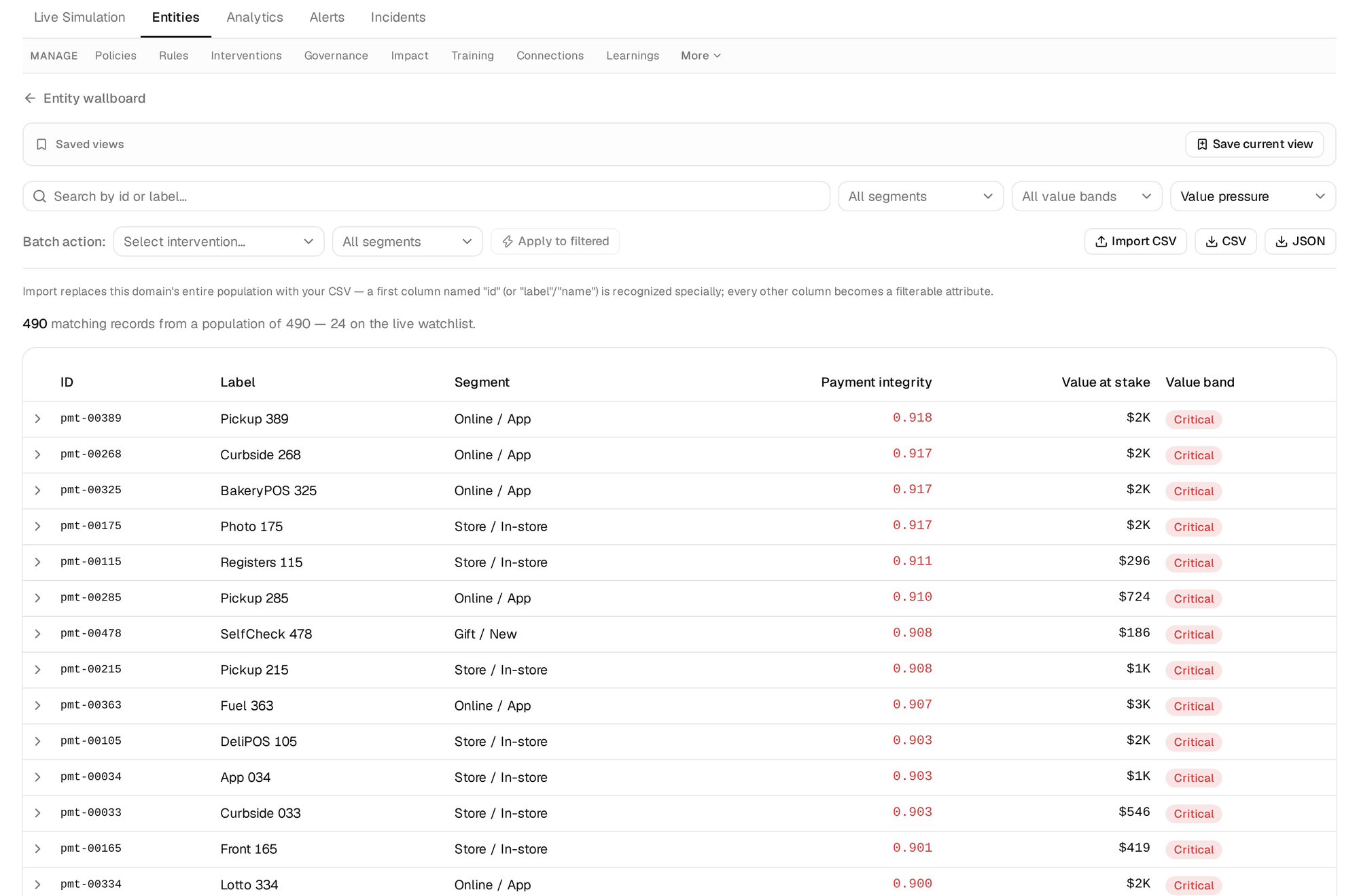
Every item, ranked by value at stake.
The first thing to judge is whether the ordering is defensible. Could you hand this to a team lead and have them work it top-down? Each row carries its pressure, the money at stake and its band.
 Fictional reference world: OgMart
2 · One item, in depth
What to do, what it costs, and why.
Ranked candidate actions with their economics, the drivers behind the conclusion, the trajectory against the events that triggered it, and, here, a notice that the evidence is conflicting so autonomous action is held.
3 · A priced decision
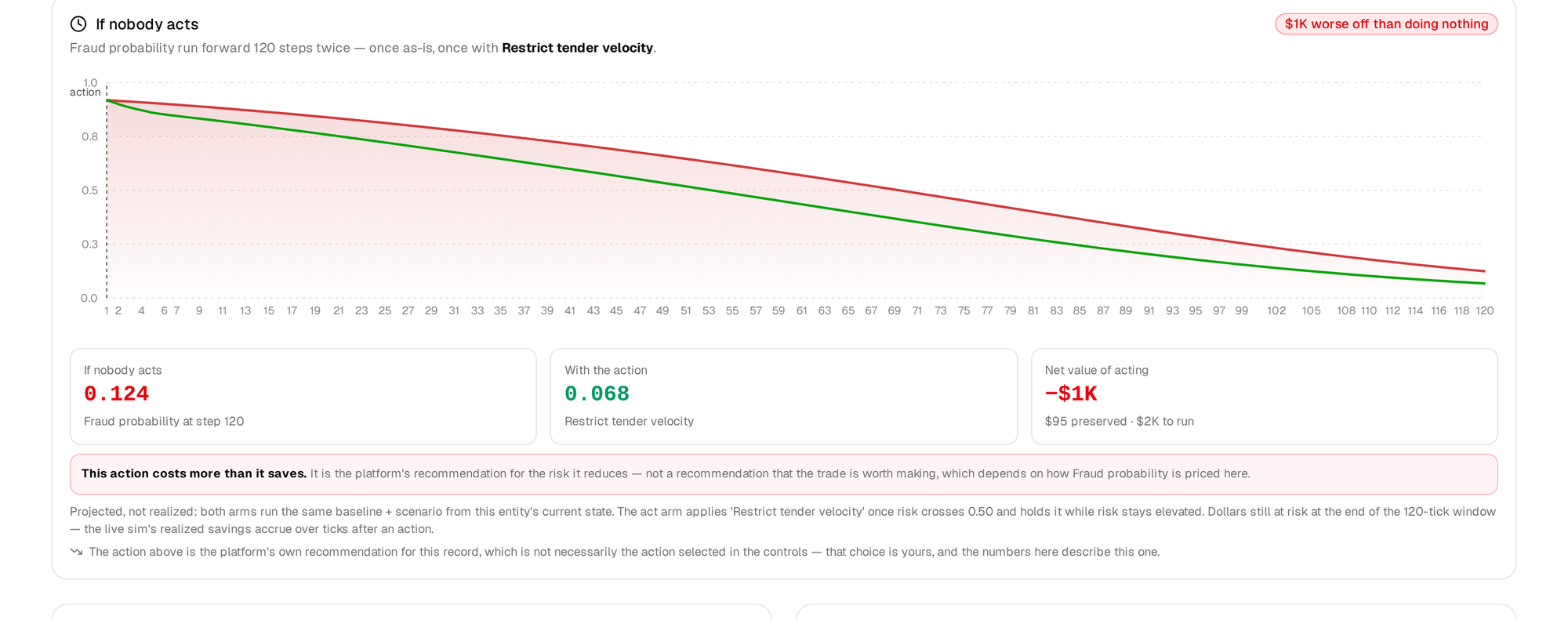
Acting against not acting.
The forward path with and without the action, and the net value of acting. The product says plainly when an action costs more than it saves. That is the point of pricing it.
 Fictional reference world: OgMart
4 · Counterfactual
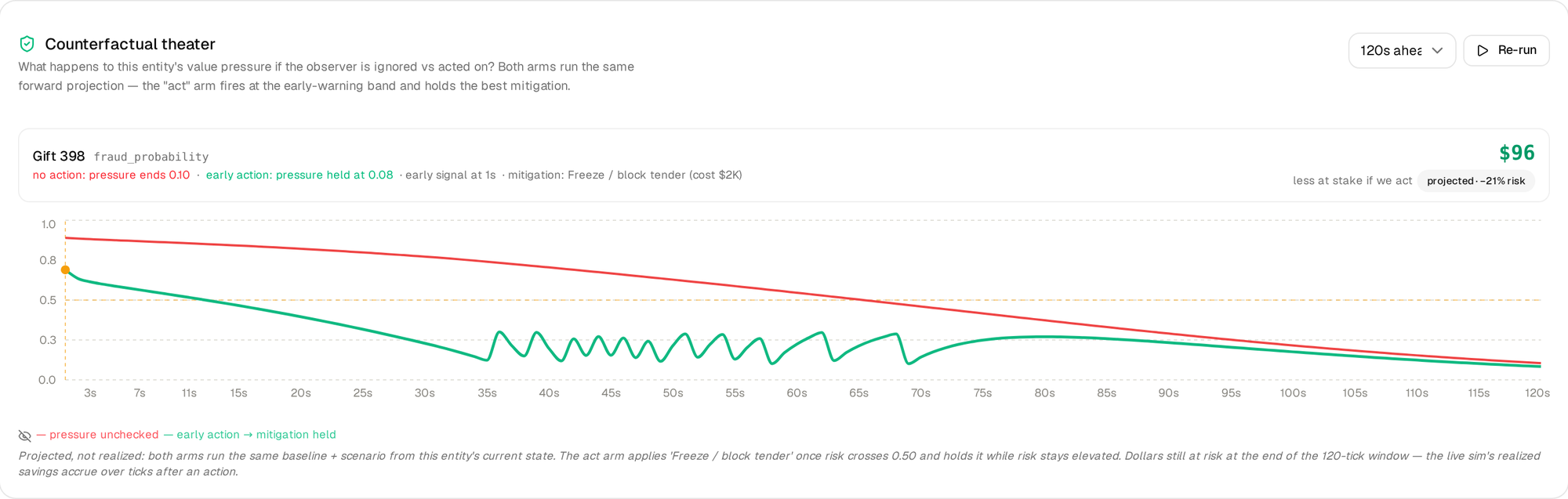
The same item, run forward twice.
Once ignored, once acted on early. The comparison replaces a post-incident argument with a measurement, and it is projected, not realized, which the screen says.
 Fictional reference world: OgMart
5 · The model comparison
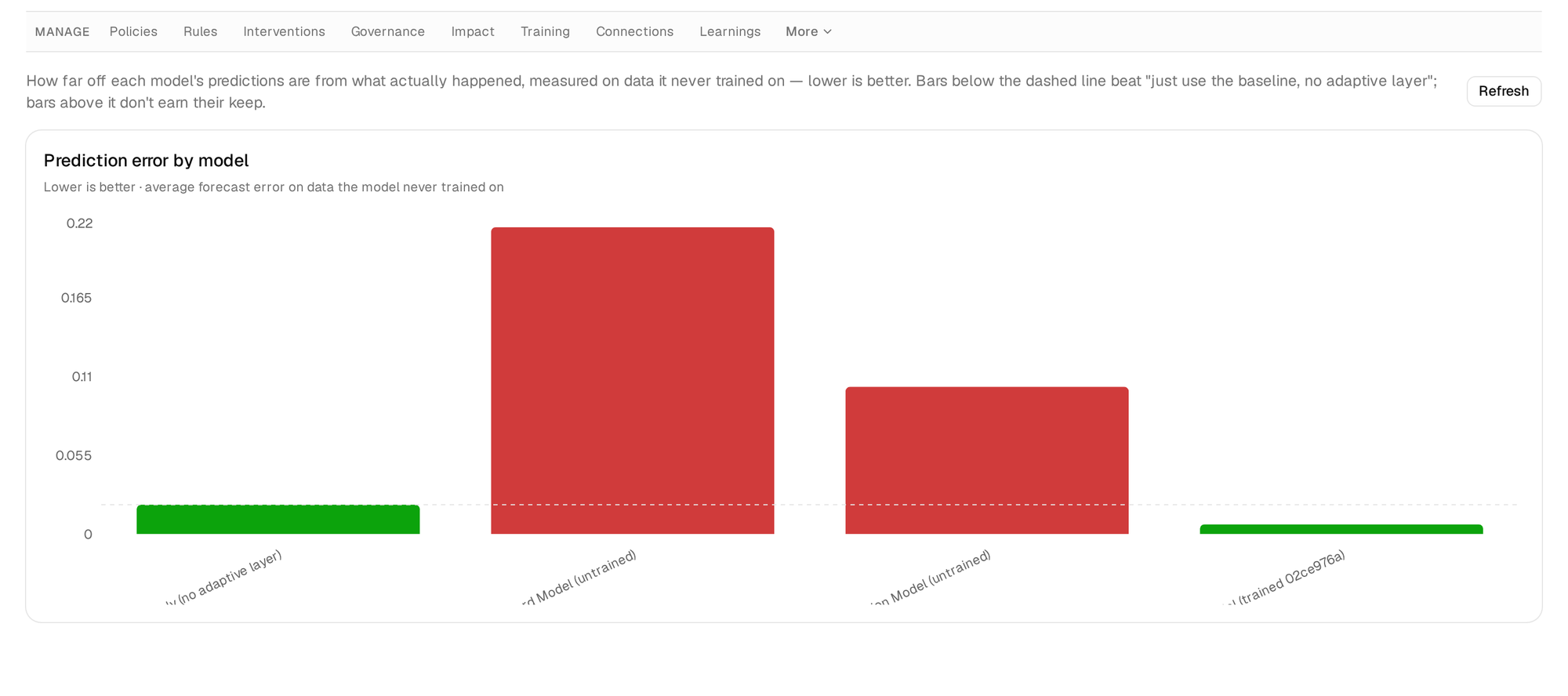
Look for the models that lose.
Each model against the dashed baseline, measured on data it never trained on. Below the line, the model adds information. Above it, it does not, and it is shown anyway.
 Fictional reference world: OgMart
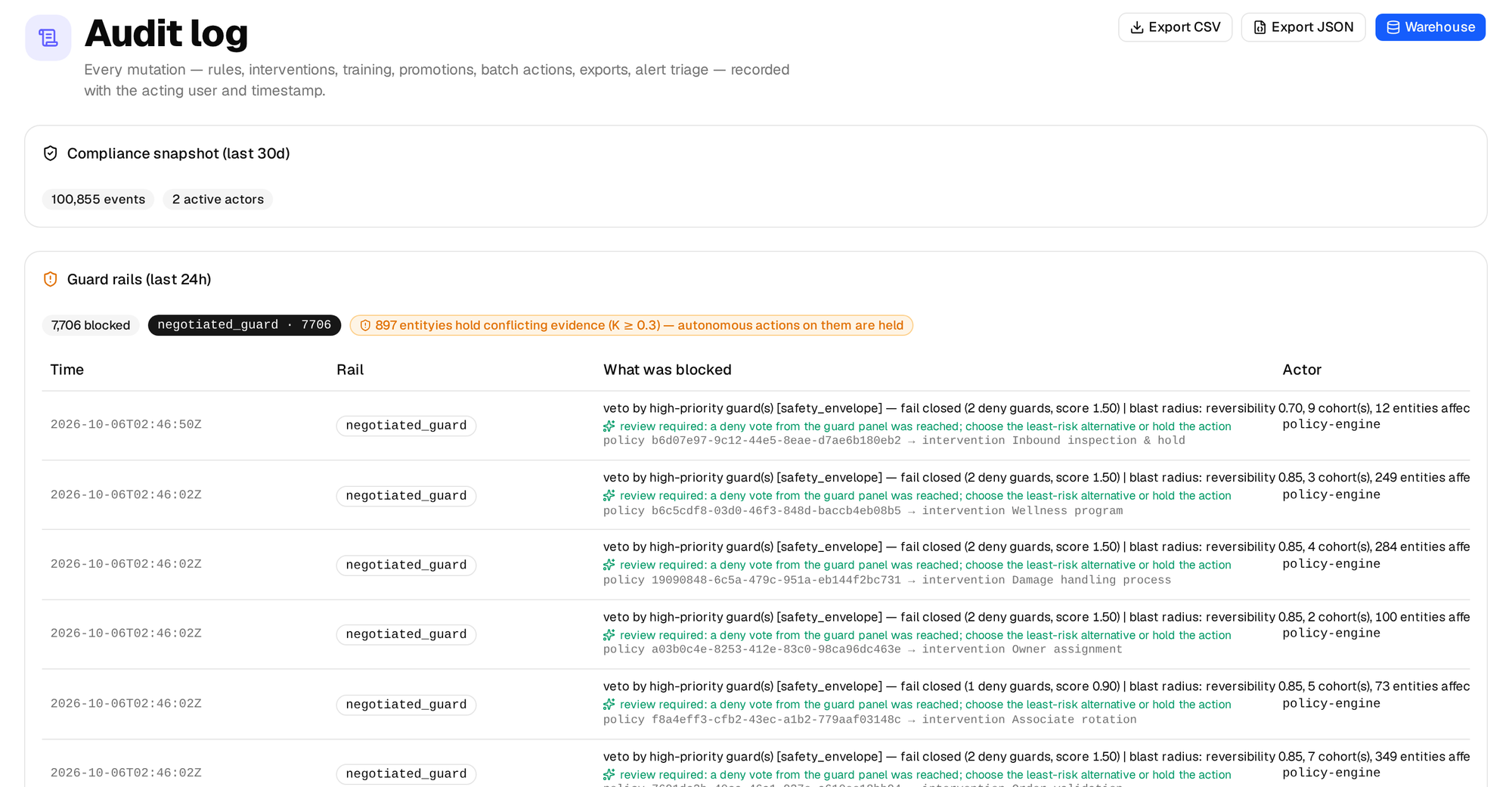
6 · The audit trail
Every blocked and held action, with its reason.
Guard rails that blocked actions, and the items whose conflicting evidence holds autonomous action, recorded with the acting user and the time.
 Fictional reference world: OgMart
Now see it on your domain
The tour is OgMart. The session is yours: your items, your events, your time frame.